The projects and initiatives that put our thematic areas into practice across South Sudan.
Economic Empowerment
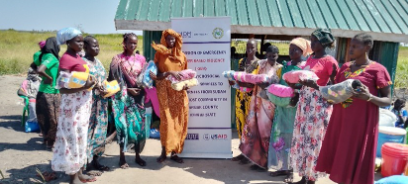
Women for Change Implemented a Rapid Response Fund (RRF) dubbed "Provision of Emergency Gender-Based Violence (GBV) and Psychosocial Support Services to Returnees from Sudan and Host Community in Fangak County, Jonglei State" project, aimed to address critical GBV issues and enhance psychosocial support for vulnerable populations. Over the reporting period, WFC successfully engaged local authorities and community leaders, conducted awareness-raising sessions, and established Women and Girls' Friendly Spaces (WGFS) in Bap and Tambuom.
Protection
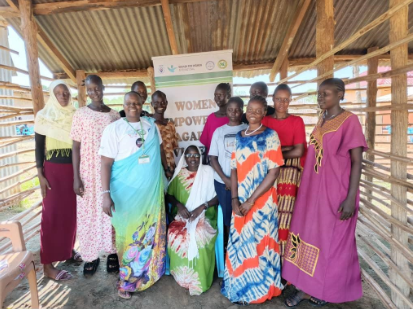
The Women Empowered Against Violence (WEAV) is a 3 year (01st November 2023 to 31st October 2026) project led by Women for Women International and co-implemented by Women for Change and South Sudan Law Society with funding from United Trust Fund (UNTF) aimed to support marginalized women and girls in Yei, Juba, and Terekeka, South Sudan, who are internally displaced or at risk of violence. The project will focus on empowerment through training, men’s engagement, and community awareness. Specifically, it will provide social and economic empowerment training to 750 women, enhancing their skills and knowledge about their rights. Additionally, the project will train 650 male allies to support women’s rights and prevent violence against women and girls (VAW/G). Community awareness-raising activities will also be conducted to transform social norms and attitudes toward gender equality and VAW/G prevention.
Capacity Strengthening and Advocacy
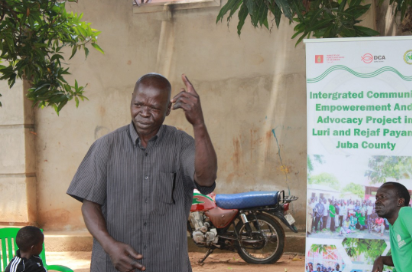
Women For Change implementing a one year running from January to December 2024 with support from DANIDA through Dan Church Aid (DCA) dubbed “Integrated Community Empowerment and Advocacy Project” made significant strides in fostering community empowerment and addressing critical issues such as gender-based violence (GBV) and economic opportunity in Luri and Rejaf Payams. One of the key accomplishments was the successful launch of the project through a well-attended inception workshop that brought together 50 stakeholders, including community leaders, government representatives, and local NGOs. This event established collaborative partnerships and set the foundation for effective project implementation.